Key takeaways
- Lupron Depot (leuprolide acetate) is a brand-name medication used to treat conditions like endometriosis, anemia due to uterine fibroids, advanced prostate cancer, and early puberty.
- Lupron Depot works by causing a temporary surge in sex hormones, which then signals the body to reduce the production of estrogen or testosterone, helping to alleviate symptoms of the treated condition within a few weeks.
- This medication may cause side effects such as hot flashes, headaches, allergic reactions, or mood changes. Discuss your risk of Lupron Depot side effects and potential drug interactions with your doctor before starting treatment.
Lupron Depot (leuprolide acetate) is a brand-name medicine prescribed to treat a variety of hormone-related health problems in adults and children. It is a type of hormone therapy.
Lupron Depot contains the active ingredient leuprolide acetate and belongs to a class of drugs called gonadotropin-releasing hormone (GnRH) agonists. Drugs of this type are also called luteinizing hormone-releasing hormone (LHRH) agonists. When used continuously, these drugs cause the body to stop producing sex hormones like estrogen and testosterone.
Doses of Lupron Depot are given via an injection into a muscle.
Lupron Depot is used to treat:
Doctors may also prescribe a form of this medication, called Lupron Depot-Ped, for use in certain children to treat early onset puberty. (The “-Ped” in the drug name refers to “pediatric”.)
Lupron Depot for endometriosis
Lupron Depot is used to treat endometriosis. It’s prescribed for people who have started having their period.
Endometriosis is a condition in which tissue similar to the lining of the uterus (womb) grows outside of the uterus. The lining of the uterus is called the endometrium. Hormonal changes related to the menstrual cycle affect the misplaced tissue, causing symptoms such as pelvic pain and heavy periods.
Lupron Depot works to treat endometriosis by stopping the body from making hormones that regulate the menstrual cycle. It can help relieve pain and reduce the size of endometrium-like tissues outside of the uterus.
Lupron Depot may be used as a first treatment to manage endometriosis symptoms. For this purpose, the drug is prescribed together with norethindrone acetate.
Use with norethindrone acetate
Norethindrone acetate is a type of hormone replacement therapy called a progestin. It replaces progesterone, a hormone that Lupron Depot stops the ovaries from making. Taking norethindrone acetate reduces your risk of certain side effects of Lupron Depot, such as bone loss.
But there’s a limitation on Lupron Depot’s use with norethindrone acetate. The total duration of treatment of Lupron Depot with norethindrone acetate is limited to 12 months.
Lupron Depot for uterine fibroids
Uterine fibroids are abnormal, noncancerous growths on or in the uterus. Common symptoms include heavy periods, heavy bleeding between periods, and pain in the abdomen. Heavy menstrual bleeding often leads to anemia (low red blood cell count).
Lupron Depot works to treat fibroids by stopping the body from making hormones that cause menstrual bleeding. The drug can help reduce the size of uterine fibroids and stop the excessive menstrual bleeding.
For this use, Lupron Depot is prescribed for 3 months together with an iron supplement. After 3 months, you’ll likely have surgery to remove the fibroids, as long as your red blood cell level has increased.
There’s a limitation on Lupron Depot’s use for fibroids. For this condition, the drug isn’t meant to be used together with norethindrone acetate.
Lupron Depot for prostate cancer
Lupron Depot is used for the palliative treatment of prostate cancer that’s advanced in adults. (Advanced means the cancer has spread beyond the prostate to other areas of the body.) Palliative treatment eases symptoms of a disease but isn’t meant to cure the disease.
Lupron Depot is used to stop the body from making hormones. This includes testosterone, a hormone that helps prostate cancer cells grow and spread. By reducing testosterone in the body, Lupron Depot may help slow the cancer’s growth. This may ease the symptoms of advanced prostate cancer, such as painful urination.
Lupron Depot-Ped for early onset puberty
Lupron Depot-Ped is used to treat early onset puberty in children. Early onset puberty is also called central precocious puberty.
Puberty is the process of sexual development through which a child physically matures into an adult. Early onset puberty occurs when this process begins too early (before age 8 years in females or before age 9 years in males).
The signs of early onset puberty are the same as those seen when puberty occurs in older children and adolescents. Shorter height and psychological problems are common symptoms.
Lupron Depot-Ped works by stopping the body from making sex hormones. This stops or reverses the signs of early onset puberty. When a child stops taking the medication, their body will resume making hormones, and puberty will continue.
Like most drugs, Lupron Depot may cause mild or serious side effects. The following lists describe some of the more common side effects that Lupron Depot may cause. These lists don’t include all possible side effects.
Keep in mind that side effects of a drug can depend on:
- your age
- other health conditions you have
- other medications you take
The side effects of Lupron Depot might differ depending on the condition it’s being used to treat.
Your doctor or pharmacist can tell you more about the potential side effects of Lupron Depot. They can also suggest ways to help reduce side effects.
Note: After the Food and Drug Administration (FDA) approves a drug, it tracks and reviews side effects of the medication. Sharing your experience helps make medications safer for everyone by giving doctors and researchers more information about how the drug works in real life. If you develop a side effect while taking Lupron Depot and want to tell the FDA about it, visit MedWatch or call 800-FDA-1088.
Mild side effects
Here’s a short list of some of the mild side effects that Lupron Depot can cause. To learn about other mild side effects, talk with your doctor or pharmacist or read Lupron Depot’s prescribing information.
Mild side effects of Lupron Depot that have been reported include:
- headache
- acne
- skin rash
- vaginal discharge, itching, or bleeding
- hair loss
- digestive problems, such as indigestion, gas, diarrhea, or constipation
- pain in your joints or muscles
- hot flashes
- menstrual cycle changes
- shrinkage of the testicles
- decreased sex drive
- fluid retention
- weakness, dizziness, or fatigue (low energy)
- injection site pain
- weight gain or weight loss
Mild side effects of many drugs may go away within a few days to a couple of weeks. But if they become bothersome, talk with your doctor or pharmacist.
Serious side effects
Serious side effects from Lupron Depot can occur, but they aren’t common. If you have serious side effects from Lupron Depot, call your doctor right away. If you think you’re having a medical emergency, you should call 911 or your local emergency number.
Serious side effects of Lupron Depot that have been reported include:
- a short-term surge in the body’s testosterone or estrogen level, which may cause the condition being treated to get worse before it gets better
- heart and blood vessel problems that can be life threatening, such as heart attack, stroke, or long QT syndrome (a heart rhythm disorder)
- seizures
- high blood sugar, which may lead to metabolism changes such as new or worsening diabetes, non-alcoholic fatty liver disease, and hyperlipidemia (a high level of fats in the blood)
- severe skin reactions, such as:
- loss of bone mineral density (a measurement of bone strength), which may lead to thin, weak bones
- mood and behavior changes
- allergic reaction
Allergic reactionSome people may have an allergic reaction to Lupron Depot.
Symptoms of a mild allergic reaction can include:
A more severe allergic reaction is rare but possible. Symptoms of a severe allergic reaction can include swelling under your skin, usually in your eyelids, lips, hands, or feet. They can also include swelling of your tongue, mouth, or throat, which can cause trouble breathing.
Call your doctor right away if you have an allergic reaction to Lupron Depot. But if you think you’re having a medical emergency, call 911 or your local emergency number.
This section contains commonly prescribed Lupron Depot dosages, but the dosage you receive will be determined by your doctor.
Forms and strengths
A healthcare professional will give you Lupron Depot as an injection directly into a muscle.
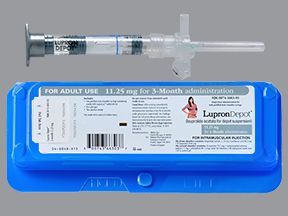
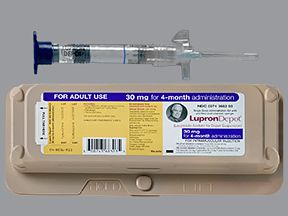
Lupron Depot and Lupron Depot-Ped come in syringes that contain a powder and a solution. A healthcare professional will mix the contents of the syringe just before they inject it into your muscle.
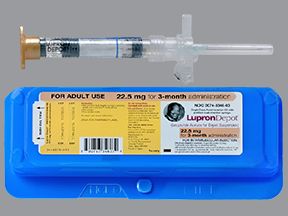
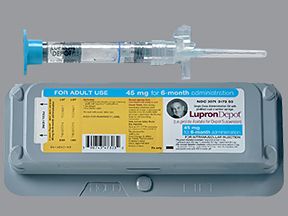
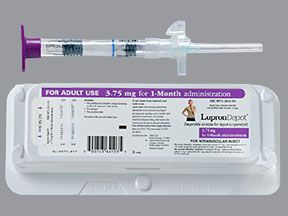
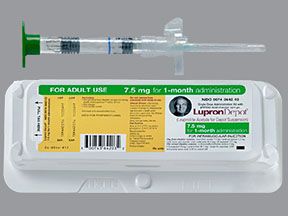
The drug comes in the following strengths:
- 3.75 milligrams (mg)
- 7.5 mg
- 11.25 mg
- 15 mg
- 22.5 mg
- 30 mg
- 45 mg
Recommended dosages
Your doctor will prescribe the dosage of Lupron Depot that’s right for you. Keep reading to learn more.
Dosage for prostate cancer
Lupron Depot’s dosage for advanced prostate cancer may be any of the following:
- 7.5 mg every 4 weeks
- 22.5 mg every 12 weeks
- 30 mg every 16 weeks
- 45 mg every 24 weeks
Dosage for endometriosis
For endometriosis, your doctor may prescribe either of the following Lupron Depot dosages:
- 3.75 mg once per month
- 11.25 mg once every 3 months
Your doctor may prescribe Lupron Depot treatment for up to 6 months. If your symptoms return after this initial treatment, your doctor may prescribe another 6 months of treatment. They may have you take Lupron Depot by itself or with norethindrone (a progestin hormone).
Dosage for uterine fibroids
For anemia caused by uterine fibroids, your doctor may prescribe either of the following Lupron Depot dosages:
- 3.75 mg once per month for up to 3 months
- 11.25 mg as a single dose (which provides 3 months of treatment)
Children’s dosage for early onset puberty
For early onset puberty, the dosage of Lupron Depot-Ped is based on the child’s body weight. The typical dosage is one dose every 1, 3, or 6 months.
How long does Lupron Depot take to work?
Lupron Depot begins working right away. But in the first 1 to 2 weeks, the drug may cause a short-term surge in your body’s testosterone or estrogen level. This may cause the condition being treated to get worse before it gets better. Within 2 to 4 weeks of starting treatment, your testosterone or estrogen levels should drop. When this occurs, you may start to have reductions in the symptoms of your condition.
Here are answers to frequently asked questions (FAQ) about Lupron Depot.
When will I get my first period after stopping Lupron Depot treatment?
You may get your period within 3 months after your last dose of Lupron Depot. But this can vary, depending on your dosage.
Lupron Depot commonly causes changes in your menstrual cycle, such as not having periods. This is because the drug stops your body from making hormones, including estrogen and progesterone. These hormones typically regulate the menstrual cycle. As Lupron Depot slowly wears off, your body will resume making these hormones and having periods.
If you have questions about what to expect during or after your treatment with Lupron Depot, talk with your doctor or pharmacist.
Is Lupron Depot used to treat breast cancer?
Doctors may prescribe Lupron Depot off-label to treat certain types of breast cancer. Off-label refers to when doctors prescribe a drug for a use other than the those specifically approved by the Food and Drug Administration (FDA).
Some hormones, such as estrogen and progesterone, can fuel the growth and spread of some cancers. This includes certain types of breast cancer. Lupron Depot is used to stop your body from making these hormones. This effect is meant to slow or stop the cancer from growing and spreading.
Talk with your doctor if you have questions about FDA-approved or off-label treatments for breast cancer.
If I stop my Lupron Depot treatment, will I have withdrawal symptoms?
Stopping Lupron Depot isn’t known to cause withdrawal symptoms. Withdrawal symptoms are side effects that may occur when you stop taking a drug that your body has become dependent on. With drug dependence, your body becomes used to a drug and needs it to function as usual.
Note that Lupron Depot takes a while to wear off after your last dose. Exactly how long depends on the dosage you received. So if you have side effects, you may continue to have them until the drug completely wears off and your body resumes making hormones. (Lupron Depot works to stop your body from making hormones.)
Additionally, as your hormones increase to their natural levels, you may notice changes in your body. The symptoms of your condition may return or get worse. So before stopping treatment with Lupron Depot, it’s important to talk with your doctor. They’ll help you decide if another treatment plan would be better for you.
Your doctor will explain how Lupron Depot will be given to you. They’ll also explain how much you’ll be given and how often.
Receiving Lupron Depot
A healthcare professional will give Lupron Depot to you as an injection directly into a muscle.
They’ll give you a dose in one of the following injection sites:
- deltoid (muscle in your upper arm)
- gluteal area of your buttock
- outer area of your upper thigh
Receiving Lupron Depot with other drugs
If you’re receiving Lupron Depot for endometriosis, your doctor may also prescribe norethindrone acetate.
Norethindrone acetate comes as an oral tablet. It’s a type of hormone replacement therapy called a progestin. It replaces progesterone, a hormone that your body stops making while you’re using Lupron Depot treatment. Taking norethindrone acetate with Lupron Depot reduces your risk of certain side effects of Lupron Depot, such as loss of bone strength.
Lupron Depot and Eligard are both brand-name prescription medications. Both contain the same active ingredient, leuprolide acetate. But they differ in some of their uses.
To learn more about how Lupron Depot and Eligard compare, see “Eligard vs. Lupron Depot” in this Eligard article. You can also ask your doctor if one of these drugs may be right for you.
When considering Lupron Depot treatment, some important things to talk with your doctor about include your overall health and current medications. Read on to find out more about what factors can affect whether Lupron Depot is a good treatment option.
Interactions
Taking a medication with certain vaccines, foods, and other things can affect how the medication works. These effects are called interactions.
No medications, supplements, or foods are known to interact with Lupron Depot or Lupron Depot-Ped. But this doesn’t mean drug interactions with Lupron Depot or Lupron Depot-Ped won’t be discovered in the future. For example, new drugs may become available that interact with these medications.
So before starting either medication, it’s still a good idea to tell your doctor about all medications you take, including prescription and over-the-counter types. Also describe any vitamins, herbs, or supplements you use.
Your doctor or pharmacist can tell you more about drug interactions that may occur with taking multiple medications.
Other interactions
Certain lab tests may be affected by Lupron Depot or Lupron Depot-Ped. These medications may cause inaccurate results in lab tests that check hormone function. Doctors use such lab tests to diagnose or monitor various medical conditions.
Keep in mind that Lupron Depot takes a while to wear off after you stop treatment. So lab tests that check hormone function may not be accurate during treatment and up to 6 months after your last dose.
For more information about lab tests and Lupron Depot, talk with your doctor.
Lupron Depot and alcohol
For most people, drinking alcohol occasionally or in moderation is safe during Lupron Depot treatment.
But long-term alcohol use may increase the risk of bone loss. Lupron Depot treatment also may increase this risk, especially in people who already have thin or weak bones.
If you drink alcohol, talk with your doctor about how much is safe for you to consume during Lupron Depot treatment.
Pregnancy and breastfeeding
It’s not safe to use Lupron Depot during pregnancy. Lupron Depot may increase the risk of pregnancy loss or cause harmful effects in a developing fetus.
If you’re able to become pregnant, your doctor will have you take a pregnancy test. They’ll need to confirm that you aren’t pregnant before they give you Lupron Depot.
Also, if you’re able to become pregnant, talk with your doctor about birth control. A nonhormonal birth control method, such as condoms, is recommended during Lupron Depot treatment.
Receiving Lupron Depot while breastfeeding is not recommended. This is because the effects of Lupron Depot on a breastfed child aren’t known.
If you’re pregnant or breastfeeding, or planning to become pregnant or breastfeed, talk with your doctor before starting Lupron Depot. They’ll advise you on the best treatment plan during this time.
Other warnings
Lupron Depot may not be right for you if you have certain medical conditions or other factors that affect your health. Talk with your doctor about your health history before you take Lupron Depot. Factors to consider include those in the list below.
- previous allergic reaction to Lupron Depot or any of its ingredients
- conditions that cause bone loss, such as osteopenia. or osteoporosis
- depression
- diabetes
- heart disease, such as a heart rhythm problem called long QT syndrome
- history of allergies, asthma, sinusitis, or similar issues
- pregnancy and breastfeeding (see above)
Whether you have health insurance or not, cost may be a factor when considering Lupron Depot. The price you’ll pay for the drug may depend on several factors, such as your treatment plan and the pharmacy used.
If you have questions about how to pay for your prescription, talk with your doctor or pharmacist. A program called myAbbVie Assist may also be available.
Disclaimer: Healthline has made every effort to make certain that all information is factually correct, comprehensive, and up to date. However, this article should not be used as a substitute for the knowledge and expertise of a licensed healthcare professional. You should always consult your doctor or another healthcare professional before taking any medication. The drug information contained herein is subject to change and is not intended to cover all possible uses, directions, precautions, warnings, drug interactions, allergic reactions, or adverse effects. The absence of warnings or other information for a given drug does not indicate that the drug or drug combination is safe, effective, or appropriate for all patients or all specific uses.
Optum Perks is owned by RVO Health. By clicking on this link, we may receive a commission. Learn more.