














The Fast Facts
- Vitamin E can help with skin and inflammatory diseases and boost antioxidants in your body.
- Not everyone needs to supplement.
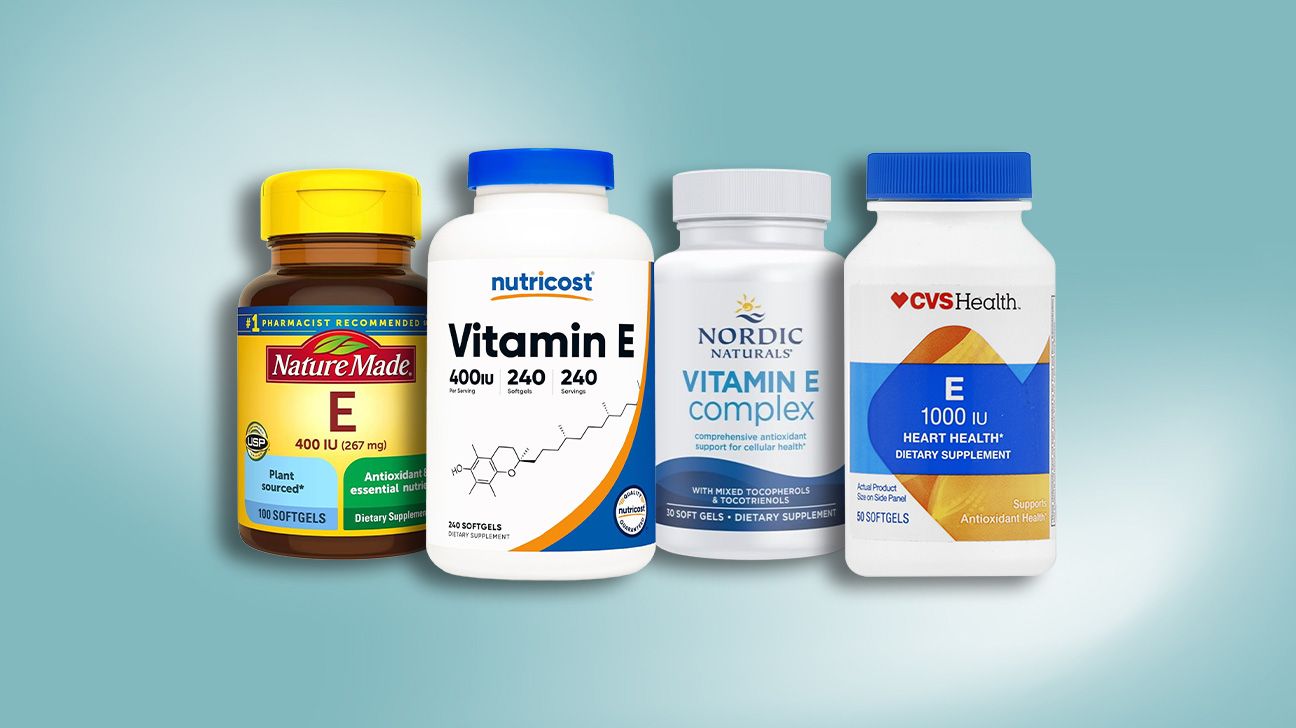
- We’ve vetted and chosen Nutricost Vitamin E, Nordic Naturals Vitamin E Complex, and more as our top options.
Vitamin E is a fat-soluble vitamin (absorbed in the body with fats) that plays several roles in your system, including serving as an antioxidant and boosting heart and eye health.
It may also promote healthy skin, especially when applied topically. It’s
Most people don’t need to take vitamin E supplements orally. Some people who may need vitamin E supplements include those with conditions that cause fat malabsorption, such as Crohn’s disease and cystic fibrosis.
However, if you do need to take a vitamin E supplement, there are some vetted options.
Pricing guide
- $ = under $0.20 per serving
- $$ = $0.20–$0.40 per serving
- $$$ = over $0.40 per serving
Here’s a quick look at how our top picks compare:
Vitamin E supplements can help prevent deficiency, which may be particularly important for those who have chronic conditions that affect the digestion and absorption of fat.
Vitamin E supplements may also offer other health benefits, including:
- Heart health: Some research suggests that the antioxidant effects of vitamin E could help protect against some risk factors for heart disease. However, other studies have turned up conflicting findings on the effects of supplementation.
- Eye health: Vitamin E is involved in the development of certain conditions that affect vision, such as macular degeneration. More research is needed to find out whether
supplementation may be beneficial . - Cancer prevention: Some test-tube studies suggest that vitamin E may also help slow the growth and spread of cancer cells, thanks to its antioxidant properties. However,
studies in humans are limited. - Brain function: According to one review of 22 studies, vitamin E may help preserve brain function and could therefore help slow cognitive decline. Still, additional research is needed, as studies have turned up mixed results.
Products were included in this list based on the following criteria:
- Testing and certifications: We included products that are rigorously tested, ideally by third-party labs.
- Dose: All the products below contain at least 100% of the Daily Value (DV) for vitamin E.
- Vitamin E type: Most of the products below feature vitamin E as alpha-tocopherol for optimal absorption.
- Ingredients: We chose products that contain minimal additives and fillers.
- Vetting: All the products included have been vetted to ensure that they meet Healthline’s medical and business standards.
Our Medical Standards and Insights team has carefully researched and vetted over 11,000 products and services. We fact-check health claims, evaluate ingredients, and look into each brand’s reputation before sharing products and services on Healthline.
To choose the brands on this page, we considered all the vitamin brands that passed our vetting process. Then, we personally tested some of them to narrow down our list even further.
Why you should trust us
Every brand and product on our list has been vetted to ensure that it aligns with Healthline’s brand integrity standards and approach to well-being. We’ve vetted 36 Vitamin E products and approved 31. Each product in this article:
- adheres to allowable health claims and labeling requirements, per Food and Drug Administration (FDA) regulations
- is manufactured in facilities that adhere to current good manufacturing practices (CGMPs) established by the FDA
- is produced by a medically credible company that follows ethical, legal, and industry best standards
- is made by a company that provides objective measures of trust, such as having its supplements validated by third-party labs
Additionally, each product was selected by a registered dietitian.
When choosing a vitamin E supplement, several factors should to considered, including third-party testing, ingredients, the form of vitamin E, and dosage.
Third-party testing
Because the FDA doesn’t regulate supplements in the same way it regulates drugs, third-party testing ensures that the supplement label accurately reflects what’s in the bottle.
Choosing a product certified by a third-party organization such as USP or NSF International can also help ensure quality and purity.
Ingredients
It’s important to select a vitamin E supplement made with high quality ingredients and few fillers.
Ideally, it will be made with an oil, because this helps boost your body’s absorption of fat-soluble vitamins.
Additionally, if you prefer to take naturally sourced vitamin E, you should avoid supplements that contain the synthetic form, dl-alpha-tocopherol.
Form
Vitamin E supplements are available in a variety of forms, including capsules, softgels, and chewable tablets.
Although some liquid vitamin E oils are available for oral use, most are formulated to direct application to your skin.
Additionally, it appears that few, if any, liquid vitamin E supplements have undergone third-party testing.
Dosage
The DV for vitamin E is 15 mg for adults and children ages 4 years and older.
Some supplements may list the amount of vitamin E in international units (IU). The DV for vitamin E in IU is 22.4 IU of natural vitamin E or 33.3 IU of synthetic vitamin E.
Meanwhile, the Tolerable Upper Intake Level — the maximum amount you can safely take without any side effects — is 1,000 mg per day for adults.
If you take too much vitamin E, it can build up in your fat stores over time and cause serious complications, such as excessive bleeding, so it’s best to consult a healthcare professional before using high dose supplements.
Most people don’t need a vitamin E supplement and can easily meet their needs by following a healthy, well-rounded diet.
However, supplementation may be recommended for some people, including those with certain health conditions that can impair the digestion or absorption of fat.
This includes medical conditions such as:
- Cystic fibrosis: a genetic disorder that affects the lungs and digestive tract
- Crohn’s disease: a chronic condition that causes inflammation in the digestive tract
- Abetalipoproteinemia: a rare genetic disorder that affects fat absorption
- Ataxia and vitamin E deficiency (AVED): an inherited neurodegenerative disorder characterized by involuntary muscle movements
- Cholestasis: a disorder that causes reduced bile flow from the liver, which can impair fat absorption
- Celiac disease: an autoimmune disorder triggered by the consumption of gluten
While taking 540 mg or less of vitamin E per day is unlikely to cause side effects, it’s best to consult a healthcare professional before adding a vitamin E supplement to your routine.
Though vitamin E deficiency is rare, it can occur in people with chronic conditions that affect fat absorption.
Some of the possible symptoms associated with vitamin E deficiency are:
- vision problems
- loss of sensation in the arms or legs
- decreased immune function
- muscle weakness
- loss of control over body movements
However, keep in mind that these symptoms are associated with a severe deficiency.
In fact, though the average American diet provides less than the recommended daily amount of vitamin E, most people are unlikely to experience any symptoms of deficiency.
Ideally, look for vitamin E supplements that contain alpha-tocopherol, which is the biologically active form of vitamin E that is most well-absorbed by the body.
Those who prefer naturally sourced vitamin E may want to opt for supplements made with d-alpha tocopherol. Products that contain dl-alpha tocopherol are derived from synthetic vitamin E but are often more affordable.
While most people can meet their vitamin E needs by following a balanced and nutritious diet, taking 540 mg or less per day is unlikely to cause any side effects.
Taking amounts higher than this each day is not recommended unless advised by a healthcare professional.
Vitamin E supplements are helpful for promoting the health of the skin, heart, and eyes.
They can be especially useful for people who have difficulty meeting their vitamin E needs through diet alone, including people with health conditions that affect fat absorption.
Nordic Naturals Vitamin E Complex is Healthline’s choice as the best overall vitamin E supplement as it contains highly absorbable forms of vitamin E, is third-party tested, includes extra-virgin olive oil to enhance absorption.
Useful supplement shopping guides
Check out these two articles to help make supplement shopping a breeze:
Vitamin E supplements generally aren’t necessary unless a healthcare professional has instructed you to take them.
It’s best to choose vitamin E supplements that are third-party tested, contain minimal fillers and additives, and provide at least 100% of the DV per serving.